Smile My Heart,Smile~Louise c. Fryer

Smile My Heart Smile ©2012 Louise c. Fryer


Showing posts with label Social Justice. Show all posts

Friday, December 24, 2021

Another Kind of Christmas: Close to the Earth

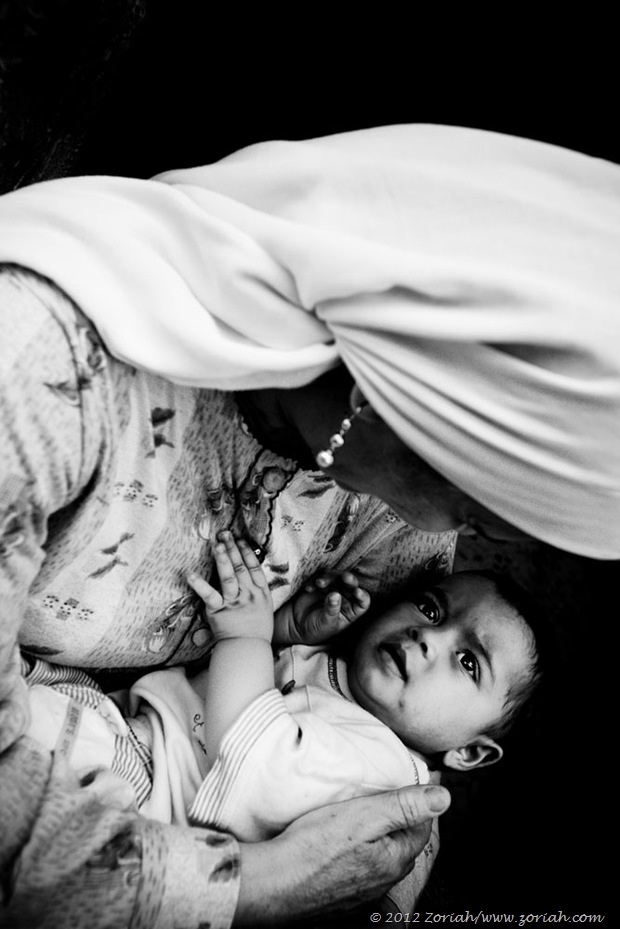
Gaza mother and child ZoriahWoman and Child - Refugee Camp, Gaza City © Zoriah/www.zoriah.com
Note from the Photographer: A woman holds a child in Gaza City's Beach Camp, one of the world's longest-standing refugee camps. The poverty in such areas often makes you feel as if you have taken a step back in time.

And so it was that while they were there, 
the days were accomplished that she should be delivered.
And she brought forth her firstborn son, and wrapped him

in swaddling clothes, and laid him in a manger;
because there was no room for them in the inn.
Luke 2: 6-7 KJV

May the God of your Soul give you peace in this Season of Brotherhood and May Angels walk with you into the New Year.

Sunday, December 11, 2011

In Times of Peace ~Khan Yunis, Gaza Strip

Khan Yunis Refugee settlement destruction Zoriah

© zoriah/www.zoriah.com The owner holds all original copyright and licenses. Republishing rights for bloggers only, companies, organizations, NGO's and similar must first obtain permission before republishing. Contact www.zoriah.com/contact for more information or email info at zoriah dot com.

Damage from attacks on a Palestinian neighborhood in Khan Yunis, southern Gaza Strip in March, 2006

At the moment, with journalists trapped in Israel and not able to enter the Gaza Strip to report, I will focus my attention on the ongoing humanitarian crisis in Gaza. If people have contrary views to mine and believe different sides of these issues need to be covered, I encourage you to get out there and do it. My assumptions were affirmed by friends living in Gaza that the situation there is quite desperate. My focus continues to be the human side of conflict and not the political side and I hope the images I am posting from Gaza will show how bad the situation is there even during "times of peace." I also encourage comments and will pay special attention to those posted by people who have lived both in Gaza and in Israel and understand both sides of this situation in reality and not just in theory. ~Zoriah

Kindness
Before you know what kindness really is
you must lose things,
feel the future dissolve in a moment
like salt in a weakened broth.
What you held in your hand,
what you counted and carefully saved,
all this must go so you know
how desolate the landscape can be
between the regions of kindness
.

~Excerpt Naomi Shihab Nye.

Saturday, November 12, 2011

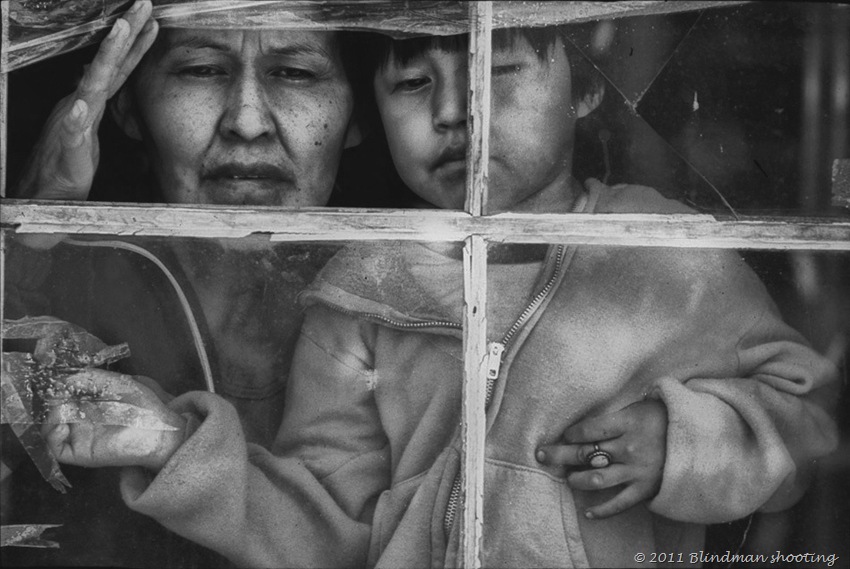
Broken Cord

image2011©Blindman Shooting

Remember

Remember the sky that you were born under,
know each of the star's stories.
Remember the moon, know who she is. I met her
in a bar once in Iowa City.
Remember the sun's birth at dawn, that is the
strongest point of time. Remember sundown
and the giving away to night.
Remember your birth, how your mother struggled
to give you form and breath. You are evidence of
her life, and her mother's, and hers.
Remember your father. He is your life also.
Remember the earth whose skin you are:
red earth, black earth, yellow earth, white earth
brown earth, we are earth.
Remember the plants, trees, animal life who all have their
tribes, their families, their histories, too. Talk to them,
listen to them. They are alive poems.
Remember the wind. Remember her voice. She knows the
origin of this universe. I heard her singing Kiowa war
dance songs at the corner of Fourth and Central once.
Remember that you are all people and that all people are you.
Remember that you are this universe and that this universe is you.
Remember that all is in motion, is growing, is you.
Remember that language comes from this.
Remember the dance that language is, that life is.
Remember.
~ Joy Harjo ~(from How we Become Human)


A Fight For Her Grandchildren Mirrors A Native Past

by NATHAN ROTT

October 25, 2011

Suzanne Crow, 58, has made and received a lot of bad telephone calls in her life, including the time she told her family that her 3-year-old son had died in a hospital because there wasn't a doctor on duty to care for him. Life in South Dakota as a displaced member of the Lakota and Dakota Sioux tribes can be tougher than most.

"It's affecting the tribes in more ways than just them being gone. It's affecting the genetic memory. Maybe those are our chiefs coming up and they're gone," she tells Michel during the interview.

But the phone call she received on a sunny May day in 2007, Crow says, is still one of the worst. A distant relative had just driven by her home in Sioux Falls, and Crow says what she heard instantly connected her past to her present, bringing the next several years of her life to a near stop.

"The cops are at Lena's house," Crow said the relative told her. "I think they're taking your grandchildren."

Brianna was 6-years-old. Her younger brother was 5.

Their mother had left a cousin in charge, but Lena was late coming home. Their father, who was an illegal immigrant, was caught and deported years earlier. So when police found the children in the front yard after their cousin left, there was nobody to take care of them.

The children, however, had a plan for situations like this. If they were ever left alone or if someone was drinking at home, they were always instructed to go across the street, to their grandma's. If she wasn't there, the back door would be left unlocked.

But on that May day, Crow wasn't home and the back door was bolted shut.

A Disproportionate Population

In South Dakota, where American Indians make up less than 15 percent of the state's child population, 60 percent of the state's foster care population is American Indian children.

Suzanne Crow's story is part of an NPR News investigation. Read more about the series here.

Derrin Yellow Robe, 3, stands in his great-grandparents' backyard on the Crow Creek Reservation in South Dakota. Along with his twin sister and two older sisters, he was taken off the reservation by South Dakota's Department of Social Services in July 2009 and spent a year and a half in foster care before being returned to his family.

Native Foster Care: Lost Children, Shattered Families

Nearly 700 Native American children in South Dakota are removed from their homes every year.

It's a number that Crow is familiar with and a number that always struck her as ironic.

For more than a century, a similar number of American Indian children were removed from their homes, families and cultures and placed in boarding schools. It was part of the U.S. government's assimilation policy. She had been sent away when she was 5-years-old. Her mother couldn't afford to provide for her or her sister. So, she enrolled them at Saint Paul's Indian Mission, an Indian boarding school on the Yankton Sioux Reservation in Marty, S.D., built in the 1920s during the middle of the U.S. government's assimilation policy years.

"There is a very strong history in this country of removing Indian kids from their homes," says Brenda Child, who chairs the University of Minnesota's American Indian Studies program. Her grandfather was a student at the first off-reservation boarding school, Carlisle Indian Industrial School.

But by 1958, when Crow started school there, "assimilation as a policy had ended," Child says. Yet its legacy remained and Crow's story, Child says, is one that's familiar.

American Indian parents who lost their children forgot how to be parents and their children were no longer being raised with parents to learn those skills from. Crow still remembers her first day, walking into a long room filled with white dresses. It was a little girl's dream, she says, until she turned around.

Her mom was gone. "I cried for three days," she says.

Rules To Be Followed

It took Crow just over two hours to return to Sioux Falls the day her grandchildren were removed from their home. But it was too late.

When Crow arrived home, her grandchildren had already been taken to Children's Inn, an emergency shelter and foster home in Sioux Falls. Crow drove straight there, she says, and asked to take her grandchildren home.

"It's not that easy," says Children's Inn's Director Amy Carter. Carter didn't tell Crow no herself, she's only been director for three years and wasn't familiar with Crow's case, but she's seen similar stories. "That situation is more common than you'd like to think," she says.

Because of that, there's a system of rules that has to be followed.

"It's a complex system, but it's made that way to ensure the safety of the children," Carter says.

By the time children reach her organization, they're already under the custody of the state and the state's Division of Child Protection Services (DCPS) calls the shots. Children's Inn is just the starting point to a long process.

"I can understand why people get frustrated with it," Carter says, "and I won't deny it can be frustrating. But that's the system we're working in."

Process Harkens Back To Boarding School Days

Life at Saint Paul's was full of processes. There were routines and rules that were strictly enforced, Crow recalls

American Indian Boarding Schools Haunt Many

The government-run boarding schools required students to talk and dress as mainstream Americans.

thumbnail

American Indian School a Far Cry from the Past

Much has changed since the days when off-reservation schools were used to expel Indian culture.

No speaking in the native Lakota language, no gathering in groups larger than two, no talking back.

"At one time they had 500 children here," says David Tickerhoof, a current pastor at Saint Paul's Church. "There had to be a pretty stringent discipline system."

The school is now tribally run and Tickerhoof has only been at the neighboring church for 14 years, so he can't speak to specifics of the school's past. But from talking with former teachers and students, he understands the history of the school and its surrounding community.

"It was like the inner-city in a rural setting," he says.

Crow said she recognizes some positive things about the school. Since her mother couldn't provide for her, at least at Saint Paul's, she was fed, sheltered and educated.

But there were bad parts: Haircuts, and punishments, Crow says, for speaking in her native Lakota tongue.

"The goal wasn't to make them non-Indian," Tickerhoof says, "The effort was to really help them stand as an equal in the job environment and to do that they had to be able to communicate in the dominant society."

He continues: "I'm not going to say negative things didn't happen here, that's idealistic and naive. But I think it was hard on everybody."

To cope, Crow says, they prayed.

"We'd get up and pray at our bed, then go to church and pray, then to breakfast and pray, then to school and pray, and then lunch and pray — always praying," Crow says. "I remember praying for John Kennedy when he was shot."

But most times she prayed for something else. She says she "prayed and prayed and prayed," for her grandmother to come and get her, to find her and take her away. For 12 years she prayed.

It never happened.

"Have you ever prayed and prayed and prayed for something and then it never happened?" she asks. It still haunts her.

A Prayerful Fight

More than 50 years later, Crow began the battle to get her grandchildren back by praying.

Suzanne Crow looks through a family photo album at her home in Sioux Falls, S.D., and comes across an old newspaper clipping of Sitting Bull, a Hunkpapa Lakota like herself.

John Poole/NPR

Suzanne Crow looks through a family photo album at her home in Sioux Falls, S.D., and comes across an old newspaper clipping of Sitting Bull, a Hunkpapa Lakota like herself.

"I prayed for whatever judges were involved, whatever social service people are involved — whoever's in my path I wanted to pray for them too," she says. "So I did."

For the first months she prayed that the children would be returned to their mother. Crow offered her help, went to court proceedings and took notes, but the bulk of the work she left to her daughter, Lena.

"They tried to turn her into a professional hoop dancer, jumping through all their hoops." But the children were never released.

Within a week of being taken from their mother's, they were placed in a white foster home in Sioux Falls. After about six months, Lena gave up hope, Crow says. There were too many strikes against her, so Crow says Lena attempted suicide. That attempt, though failed, killed her chances of getting her children back, Crow says. She was no longer deemed psychologically competent to be a parent.

"So that's when I filed for adoption," Crow says, "they couldn't throw any of that guilt in my face."

Crow had a house, a salaried job as a seamstress at David's Bridal and no criminal history. The problem was, she had to convince the state of the same thing and that's hard for any grandparent to do, says B.J. Jones, an attorney and judge for various tribal justice systems in the Dakotas and Minnesota.

"The state court system is so hard for grandparents to crack and sometimes it's hard to really identify what the reasons are," Jones says.

The result, he says, is this: "We have the government being the grandparents and the government doesn't have a good track record of taking care of Indian kids. Historically that's been disastrous. It's been a nightmare."

The state's department of social services says it's not trying to usurp family ties.

"We come from a stance of safety," says Virgena Wiesler, the division's director. "That's our overarching goal with all children. If they can be returned to their parent or returned to a relative and that safety can be managed, then that's our goal."

In interviews with NPR, Wiesler and the state's DCPS said they would not speak about individual cases like Crow's.

All those years — those 12 years in boarding school — not once did I get to be who I was supposed to be. Not once did I get to speak Lakota and see my grandma. They took our genetic thinking and turned it inside out. And then who are you?

- Suzanne Crow

Jones wouldn't either, but he did say that in his opinion, the limited access and rights of extended family like grandparents is the biggest problem with current law.

"I've seen a lot of cases where the grandparents would be eligible," he says, "but they've got to background you, they've got to license you and this, this, this, and that, that, that."

That's what Crow experienced.

"They tried to turn me into a fancy dancer too," she says.

She went through the steps, met with case workers, registered for and completed foster parenting classes for both the state and the tribe. She became a licensed foster parent and still, the kids remained in foster care for three years.

They were being taken care of, she says, just like she was in boarding school, but she was worried about them being raised in another culture.

"All those years — those 12 years in boarding school," she says, "Not once did I get to be who I was supposed to be. Not once did I get to speak Lakota and see my grandma. They took our genetic thinking and turned it inside out. And then who are you?"

A Return To Family 

The state eventually released Crows's grandchildren, now ages 10 and 11, from foster care, giving custody to their stepfather, who also cares for two of Lena's other children in Pipestone, Minn.

Crow says she believes she should have custody of her grandchildren.

She sees them as often as she can. She talks to them on the phone and messages them on Facebook. Earlier this year, she saw her grandson play in a soccer tournament and braided Brianna's hair before a family member's high school graduation ceremony.

She talks to them in Lakota when they'll listen, trying to instill bits of their native culture whenever she can. It's her duty as a grandmother, she says, to help give them an identity — to fight for their future because of her past.

"I think their culture is what's going to save them," she says, "It's what saved me."


About the Photographer:

Blindman shooting

I have come to realize that my art has diversity with powerful individual vision, that chronicles the life of individuals. People draw me into their lives to tell their story to anyone willing to listen and validate their reason for living. My attraction to story telling grew as my life developed behind a camera. I discovered that its not how a photographer looks at the world that is important, its their relationship with their fellow human beings and these moments of connectivity that are frozen in time for all to see.
last thought for the photographer, "Whatever you look to see outside, is waiting inside you".
Sunday, August 21, 2011

One Family, One World: Postcards from Paradise

EletElet ©2011 Istvan Kerekes

IN SILENT NURTURE

KötődésKotodes © 2011 Istvan Kerekes

IN MOMENTS OF UNSPEAKABLE LOVE

Friendship Kerekeskényelem © 2011 Istvan Kerekes

IN THE HAND OF HEALING COMFORT

courtesy of Rebecca Brooks @Recuerda mi Corazon

AND IN THE HOUR OF DESPAIR

www.sarmaritan’s purse.org

We are all one family,

one community

on this  great, revolving globe

we call  home.

We all deserve nurture,

love and comfort.

tumblr_li6cv9ADLU1qdqgjdo1_500

Please offer what love

and comfort you have

to our sisters and brothers

in the Horn of Africa.

UNICEF offers us this opportunity

right here, right now.

Don’t wait another day or another hour.

Just click on the picture below or the words in blue

TO DONATE to UNICEF.

or click on the picture below here or the word in blue to donate to SAMARITAN’S PURSE.

Turkana Food Distribution

BLESSINGS AND PEACE,

Noelle Renee


Please visit Recuerda mi Corazon for more amazing Postcards

Tuesday, August 16, 2011

HANDS: Only Kindness Matters

Kerekes57
Hands ©2011 Istvan Kerekes
"Hands"
If I could tell the world just one thing
It would be that we're all OK
And not to worry 'cause worry is wasteful
And useless in times like these
I won't be made useless
I won't be idle with despair
I will gather myself around my faith
For light does the darkness most fear
My hands are small, I know
But they're not yours, they are my own
And I am never broken
Poverty stole your golden shoes
It didn't steal your laughter
And heartache came to visit me
But I knew it wasn't ever after
We'll fight, not out of spite
For someone must stand up for what's right
'Cause where there's a man who has no voice
There ours shall go singing
My hands are small I know
But they're not yours, they are my own
I am never broken
In the end only kindness matters
I will get down on my knees, and I will pray
My hands are small I know
But they're not yours, they are my own
And I am never broken
My hands are small I know
But they're not yours, they are my own
And I am never broken
We are never broken
We are God's eyes
God's hands
God's mind
We are God's eyes
God's hands
God's heart
We are God's eyes
God's hands
God's eyes
We are God's hands
We are God's hands
~Jewel
Jewel: Hands

FOOD CRISIS IN THE HORN OF AFRICA

Samaritan’s Purse is distributing tons of food staples to fight hunger in drought-stricken Kenya, near the Somali border
As famine spreads across the Horn of Africa, Samaritan's Purse is supplying food and other aid to thousands of hungry families and malnourished children.More than 12 million people are in urgent need of food, water, and medical care in drought-stricken Kenya, Somalia, and Ethiopia. Experts estimate that starvation and related diseases have already claimed the lives of over 29,000 children under age five. The United Nations is calling the crisis "the world's worst humanitarian disaster.”Samaritan’s Purse has a team based in Garissa, Kenya, along the Somalia border, where we are distributing tons of maize, beans, corn-soy blend, cooking oil, and other necessities.
Our team—which includes experts in nutrition, healthcare, water, and sanitation—is reporting that these are some of the harshest conditions they ever have encountered.
“We drove to a local cattle market, and dead animals could be seen all along the road,” a staff member said. “At the market we spoke with local residents who said this is the worst drought they have experienced in living memory. They made a point to mention that ‘even the older generation has never seen a drought this bad.’ Many of the rural residents are flocking to town because of a lack of water and their diminishing animals stocks. At the market, there were several animals writhing on the ground, left to die because they were so badly off.”
Our emergency response includes plans to implement therapeutic care and supplemental feeding programs for malnourished children. In coordination with our local partners, we have identified sites for food distributions and therapeutic nutritional interventions.
In addition, Samaritan's Purse has launched a cash-for-work program in several villages. We are paying people to build latrines, which will help with health and hygiene conditions while providing some income in these poverty-stricken communities.
"If they are in desperate need, they can use the cash for food, but they can also use it for healthcare or other necessities," said Ruco Van Der Merwe, team leader for the response.
Clean water is another dire need. In some areas, only 20 percent of the families have access to safe drinking water. Many people are now forced to walk miles to reach a water source. As populations are shifting toward areas with better access to water, community resources are being severely strained. Our team is using tanker trucks to haul water to vulnerable villages while we identify longer-term solutions such as drilling boreholes.
“Water is such an issue,” said Zeke Rhodes, program officer. “We see women in the middle of nowhere waving their jerry cans, asking for water. It’s not unusual for people to walk 10-15 miles for water.”
The crisis in the Horn of Africa was brought on by two years of drought that is the worst in 60 years. Massive crop failure and loss of livestock have led to extreme food shortages in a region straddling Kenya, Somalia, and Ethiopia—a region that has been labeled the “triangle of death.”
As a result, hundreds of thousands of people without food and water have fled to makeshift camps in eastern Kenya looking for emergency aid. Many of the displaced are refugees from neighboring Somalia, who left their war-torn country in hopes of finding help over the border. Much of Somalia is controlled by a militant group, affiliated with al Qaeda, that has denied that a food shortage exists and threatened to maintain their ban on food aid.
“We saw a family with a donkey cart. It was a father and mother, an infant, and two daughters,” Rhodes said. “The girls were in bad shape, emaciated, but still able to walk. It was kind of a glimpse at the journey they’ve taken over the last couple of months. They’ve come a long way, and they’re going to a camp of half-a-million people in some of the most harsh environments you could imagine. It was very sobering.”
The camps in Kenya are overcrowded, and resources are stretched beyond capacity. Conditions aren’t much better outside the camps. Samaritan’s Purse church partners are finding households facing dire shortages of food and water.
Some of the worst hit counties include Wajir and Garissa, areas considered the focal point of the Somalia refugee influx. In these areas, particularly where Samaritan’s Purse partners are involved, there is limited government assistance and little help from other agencies.
Please pray for the people impacted by malnutrition and starvation, for our staff and church partners as they respond in the Name of Christ, that the conditions that are causing this catastrophic food shortage will end, and for God's help in meeting the overwhelming needs of the region.

*(Message Above Taken Directly from The Samaritan’s Purse Website).
Please Take a moment to watch this amazing short film to see what Samaritan’s Purse is doing in Kenya right now!

Here is a link on the Samaritan’s Purse site to some quite amazing photographs of the area that will give you a much better sense of what is taking place there right now.
InPictures_Jump
You may find the link to this charity’s Financial Report Here.
In addition, a link to start a sports event or any special event and create a team page on Samaritan’s Purse to raise money for the project of your choice is right Here.
Open Your Heart, Your Hands and Your Eyes to What is Going on in Our World. According to statistics on Democracy Now with Amy Goodman, this morning, 12 million people in the Horn of Africa are suffering from famine, 3.2 million, Somalis. We Are Not Alone. Children are Hungry and 29,000 Children under the age of Five are no Longer Alive because they have been claimed by Lack of proper Nutrition and the absence of Clean Water.
Be Mindful and Compassionate toward those who are Suffering. Starvation is not something you can hear or see until it actually happens and it is often too late. It is a silent killer. Today on NPR, I heard that there was a measles outbreak in several of the camps because Al-Shabaab disallowed children from getting vaccines, believing it was a Western plot. Something as simple as a vaccine can save many lives. Samaritan’s Purse also offers a World Medical Mission for doctors to volunteer on short-term mission trips. You may read more about this wonderful program Here.
Thank you for coming here and taking the time to read and watch. May Your lives be surrounded by Kindness and Compassion Every day,
Noelle Renee
My Thanks to Istvan Kerekes for his amazing photograph. Istvan, you bless me with your images and I am so grateful for them. I am also grateful for Jewel’s beautiful song, “Hands”.

Wednesday, August 10, 2011

When Art Becomes Life

london busker - South Bank

London Busker South Bank© 2011 Heather Buckley


Cloudy Bell Jar

by Delilah Miller

Someone remind me it's a beautiful life;
even if it's the ground keeping you the right way up.
Trip yourself, pat down yourself, unwind yourself and brush off yourself.
I do it all like I've done for everyone else.
The bubble of loneliness always seems ready to pop
while I try to give it a happier name,
As in art, light and movement persist to never stay the same,
Watching summer fade out of my skin
and my eyes and the air I breathe.
Still the ground's under me

and I'm under a huge cloudy bell jar.

England riots: Tariq Jahan, father of Haroon Jahan, one of the three people killed in Birmingham, speaks to the media. Photograph: Carl de Souza/AFP ~guardian.co.uk  8/2011. Link to story is Here

I don’t want you to fight.

I’m lost for words. Go home please,

go home.’

~Tariq Jahan , father of one of the murder victims, addresses the crowd desiring revenge for the deaths of the three in Birmingham.

‘It doesn’t matter what colour you are.

For anyone to lose a son is sad.

I’m just praying that nothing more happens tonight.’

~Carol White, 50, a black mother of four who has lived in Winson Green all her life.

More on this story Here

Although these are not quite haikus, I thought that the words of Haroon’s father and some observers of the scene were powerful enough to stand as such.

Linked to Haiku My Heart. For more Haikus Please visit Recuerda mi Corazon. Thank you.


About the Photographer:

Heather Buckley Photography

I simply love photography. Since I gave up commercial photography and just do it for the love of it, I probably do even more! I would take on a commission if it really excited me so do get in touch if you think it will – but right now I am really happy just taking images, experimenting with style and processing and having some fun.

I do sell my images of course and you are free to browse the gallery – images are available as prints, canvasses and downloads.

*Photo of London Busker South bank published with author permission.

Thursday, August 4, 2011

Haiku My Heart: Mayda

Mayda by Carlos DuarteMayda” © CARLOS DUARTE posted with kind permission

The Heart is not laid bare,

When Little is offered for

The Soul’s protection.

~Noelle Renee  8/4/11


The Iguana


by Isak Dinesen (Karen Blixen)
from Out of Africa

In the reserve I have sometimes come upon the iguanas, the big lizards, as they were sunning themselves upon a flat stone in a river-bed. They are not pretty in shape, but nothing can be imagined more beautiful than their colouring.

They shine like a heap of precious stones or like a pane cut out of an old church window. When, as you approach, they swish away, there is a flash of azure, green, and purple over the stones, the colour seems to be standing behind them in the air, like a comet's luminous tail.

Once I shot an iguana. I thought that I should be able to make some pretty things from his skin. A strange thing happened then, that I have never afterwards forgotten. As I went up to him, where he was lying dead upon his stone, and actually while I was walking the few steps, he faded and grew pale; all colour died out of him as in one long sigh, and by the time that I touched him he was grey and dull like a lump of concrete. It was the live impetuous blood pulsating within the animal which had radiated out all that glow and splendour. Now that the flame was put out, and the soul had flown, the iguana was as dead as a sandbag.

Often since I have, in some sort, shot an iguana, and I have remembered the one in the Reserve. Up at Meru I saw a young Native girl with a bracelet on, a leather strap two inches wide, and embroidered all over with very small turquoise-coloured beads which varied a little in colour and played in green, light blue, and ultramarine. It was an extraordinarily live thing; it seemed to draw breath on her arm, so that I wanted it for myself, and made Farah buy it from her. No sooner had it come upon my own arm than it gave up the ghost. It was nothing now, a small, cheap, purchased article of finery. It had been the play of colours, the duet between the turquoise and the 'nègre' -- that quick, sweet, brownish black, like peat and black pottery, of the Native's skin -- that had created the life of the bracelet. *

In the Zoological Museum of Pietermaritzburg, I have seen, in a stuffed deep-water fish in a showcase, the same combination of colouring, which there had survived death; it made me wonder what life can well be like, on the bottom of the sea, to send up something so live and airy. I stood in Meru and looked at my pale hand and at the dead bracelet. It was as if an injustice had been done to a noble thing, as if truth had been suppressed. So sad did it seem that I remembered the saying of the hero in a book that I had read as a child: "I have conquered them all, but I am standing among graves."

(Dinesen’s story is of course about Kenya)


 More information on the Colonization of West Africa  and its  long term consequences Here and the culture of Mali Here.

The Following video needs little introduction: K’Naan’s “Wavin Flag”. K’Naan hails from Somalia originally, a land that is currently seeing a world of struggle.

The Bozo People

The Bozo are a West African ethnic group located predominantly along the Niger River in Mali. The name Bozo is thought to derive from Bambara bo-so, 'Bamboo house'; the people accept it as referring to the whole of the ethnic group but use more specific clan names such as Sorogoye,Hain, and Tieye themselves. They are famous for their fishing and are Bozo languages).occasionally referred to as the "masters of the river." Their languages, belonging to the Soninke-Bozo subgroup of Northwestern Mande languages, have traditionally been considered dialects of one language, though in reality there are at least four distinct varieties (see Rock drawings linked to the Bozo area date back as far as 6,000 years, but many aspects of Bozo culture took shape under the 10th century Ghana Empire, when the Bozo took possession of the banks of the Niger. The Bozo were the founders of the Malian cities of Djenné and Mopti.

Though the Bozo are predominantly Muslim, they preserve a number of animist traditions as well. Their animal totem is the bull, whose body represents the Niger and whose horns represent the Bozo fishing pirogues.

Present-day Mali was once part of three West African empires that controlled trans-Saharan trade: the Ghana Empire, the Mali Empire (from which Mali is named), and the Songhai Empire. In the late 19th century, during the Scramble for Africa, France seized control of Mali making it a part of French Sudan. French Sudan (then known as the Sudanese Republic) joined with Senegal in 1959, achieving independence in 1960 as the Mali Federation. Shortly thereafter, following Senegal's withdrawal from the federation, the Sudanese Republic declared itself the independent Republic of Mali. After a long period of one-party rule, a 1991 coup led to the writing of a new constitution and the establishment of Mali as a democratic, multi-party state. About half the population live below the international poverty line of US$1.25 a day.[5]

http://en.wikipedia.org/wiki/Bozo_people

_______________________________________________________________

About the Photographer:

Carlos Duarte hails from Jerez de la Frontera, Spain. His favorite interests are, travel and, of course, photography  ~ mainly social, portrait and landscape photography, where he sees very clear connections. You may find his exquisite photos on 1x.com and also on his extraordinary blog. His travels led him to Africa, where he spent nine days in Mali and had the good fortune to photograph ‘Mayda’ which won a prestigious award from an international National Geographic contest. Africa “catches you,” he says on his blog. If you look at Carlos’s work you can see the beauty of his images and the love that went into creating them, even the ones that show struggle and pain.  We should all be grateful for such artists among us.


_______________________________________________

Finally, for more Haiku My Heart, Please visit dear rebecca’s blog at recuerda mi corazon where you may find both compassion and a sense of true belonging wherever you are in your life journey.

Sunday, July 31, 2011

Song of Tanzania

Boy looking through fence IMG_7795 N Sapio© 2011 nicolino sapio

How can I keep my soul in me, so that
it doesn't touch your soul? How can I raise
it high enough, past you, to other things?

IMG_7800 five boys looking through fence N SapioEyes ©2011 nicolino sapio

I would like to shelter it, among remote
lost objects, in some dark and silent place
that doesn't resonate when your depths resound.
Yet everything that touches us, me and you,
takes us together like a violin's bow,
which draws *one* voice out of two separate strings
.

Precious Innocence IMG_7537 N Sapio©2011 nicolino sapio

Upon what instrument are we two spanned?
And what musician holds us in his hand?
Oh sweetest song.

~ “Song” by Rilke ~

~~~~~~~~~~~~~

One Photographer’s Journey

Nicolino Sapio and children of Arusha

The photos you see above were taken by Nicolino Sapio in Arusha, a city in Northern Tanzania as part of a project to raise funds for Compassion.com, a highly respected and well established charity organization that helps children in 26 countries, who are in great need. Compassion International exists as a Christian child advocacy ministry that releases children from spiritual, economic, social and physical poverty and enables them to become happier, and more  fulfilled adults with a brighter future ahead of them.

One very satisfying way that you may connect with these children and donate to this worthy cause is to sponsor a child in need. Children in African countries, in particular, suffer the loss of parents to HIV/AIDS, and many children are left without food, medical help or care. By sponsoring a child, you can maintain a continued connection with that child and know his or her progress in the program and in his life in general. You may find information on how to become a sponsor Here.

Compassion.com also offers a program to Meet Critical Needs such as: health and medical, educational, and disaster relief and stability needs. A one-time or monthly donation can be made to this program to help many children. You may find out more about how to help Here.

If you make the compassionate and wise decision to donate or to sponsor a child, please add to Nicolino’s and my blessings by returning to this blog to tell us or emailing me personally. My email is listed on the blog. Thank you.

Peace and Light,

Noelle Renee

Linked to Postcards from Paradise. For More wonderful Postcards Please visit rebecca at Recuerda mi Corazon. Rebecca is one of the most compassionate people I know.

*All photographs are published here with permission of Nicolino Sapio.